How to Grow Olive Trees in the UK: A Beginner's Guide to Pots, Patios and Polytunnels
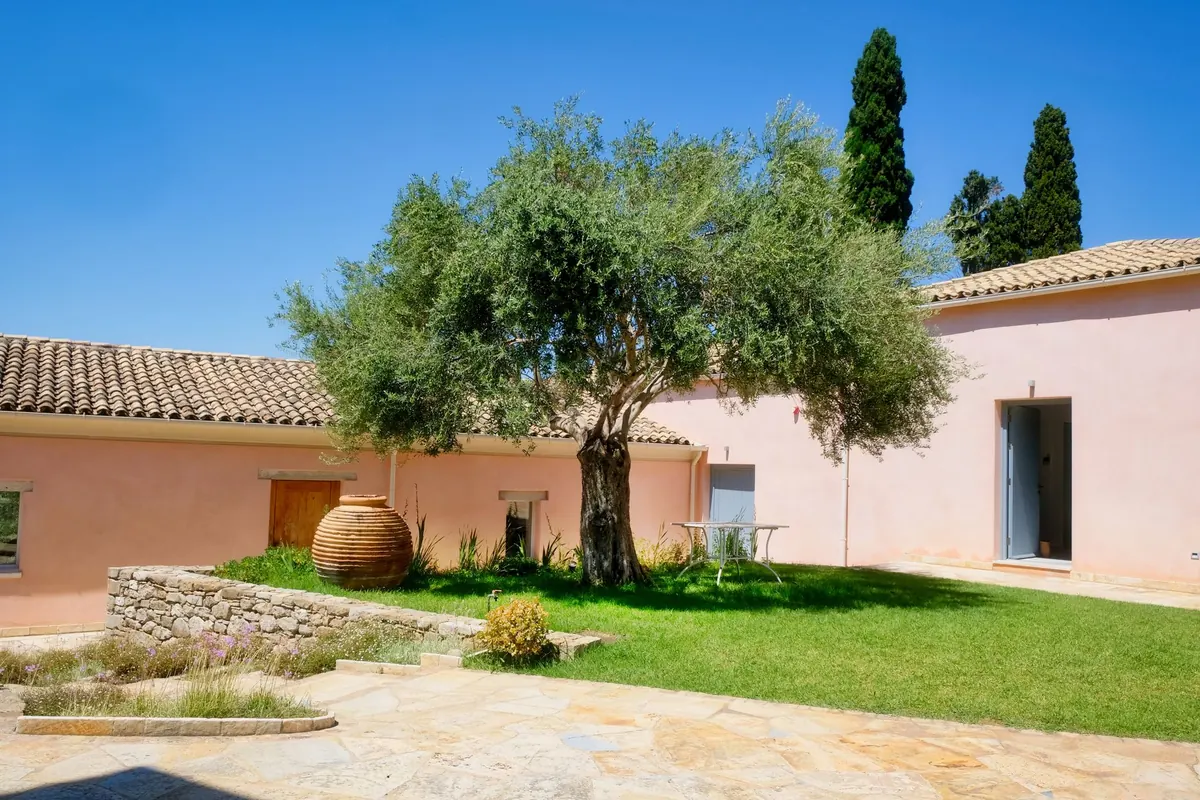
Olives are not an obvious fit for a British garden, and that is part of the appeal. Give them the two things they really want — sharp drainage and a warm, sheltered spot — and a young tree will settle in on a sunny patio, shrug off all but the harshest winters, and pay you back with silvery foliage that looks good all year. Fruit is a bonus rather than a guarantee this far north, but the trees themselves are tougher than most gardeners assume.
What an olive tree actually wants
Think about where olives grow wild: hot, dry summers on rocky hillsides, with rain arriving mainly in winter. That tells you two useful things. First, olives can cope with cold — many tolerate several degrees of frost once established. Second, and far more importantly, they cannot cope with wet feet.
In Britain it is winter wet, not winter cold, that kills olive trees. Roots sitting in cold, saturated soil rot quietly through January and February, and by spring the tree looks scorched and lifeless. Plenty of sunshine helps too, so aim for the brightest spot you have: a south or west-facing wall, a sheltered patio, or the sunny end of a garden that has been protected from cold east winds.
Choosing a hardy variety
Garden centre olives are often sold simply as "European olive" with no name and no history. They can do perfectly well, but if you are spending money, buy a named cultivar from a nursery that grows its stock outdoors in the UK. A tree that has already spent a British winter outside is a better bet than one shipped in from Italy in spring.
- Arbequina — compact and well suited to pots, with small leaves and a reasonable chance of fruit.
- Koroneiki — fine foliage and a reputation for toughness in cool conditions.
- Leccino and Frantoio — traditional Tuscan varieties often described as among the more cold-tolerant.
- Cipressino — upright and narrow, useful where space is tight.
Look for a single strong leader, healthy grey-green leaves and no thick roots circling at the surface of the pot. If fruit matters to you, check whether the variety is self-fertile; some crop more reliably with a partner nearby.
Compost and drainage: get this right first
Most failures happen here, not in the depths of winter. In open ground, plant on a low mound and mix plenty of horticultural grit into the planting hole so water drains away from the rootball rather than pooling around it.
In a container, use a soil-based compost such as John Innes No. 3, cut with roughly a third horticultural grit or perlite and a couple of handfuls of bark fines. Choose a heavy, frost-proof pot — terracotta or glazed ceramic — and stand it on pot feet. Skip the traditional layer of crocks in the base: it does not improve drainage, it simply raises the water table inside the pot. Free-draining compost and clear drainage holes do the real work. Repot every two to three years in spring, moving up one pot size at a time.
Planting, step by step
- Pick the sunniest, most sheltered spot available. A pot on a paved patio genuinely beats a bed in a cold, wet corner.
- In open ground, dig a hole no deeper than the rootball and set the tree so the top of the rootball sits level with the surrounding soil. Never bury the trunk.
- In a container, choose a pot about a third wider than the rootball. A pot that is far too large holds too much wet compost.
- Firm gently, water well, then mulch with gravel rather than bark, which keeps moisture pressed against the trunk.
- Stake for the first two years on a windy site, using a tie with a spacer so the bark is not rubbed.
Watering and feeding
An established tree in the ground needs very little watering after its first summer, apart from during a long dry spell. Pots are a different job. Water thoroughly, let the top couple of centimetres dry out, then water again — in a hot spell that may mean most days, while in winter it might be once a month, and only when the compost is not frozen.
Feed with a balanced fertiliser in April as growth restarts, then switch to a high-potassium tomato feed in June and July while flowers and fruit are forming. Go easy on nitrogen. Soft, sappy growth is tender growth, and the first frost will take it off.
Winter protection for pots, patios and polytunnels
Move pots against a house wall, ideally on the dry side, and stand them on feet so water never sits under the base. Wrap the pot — not the canopy — in bubble wrap or hessian. Insulating the roots is what matters for a container-grown tree. A fleece cover over the top helps during a hard snap, but take it off on mild days.
In the ground, a raised planting mound and gritty soil do most of the protective work. On a cold site, a simple frame of canes draped with fleece from December to March is enough. Knock heavy snow off the canopy before it sits there for days.
Using a polytunnel
For a serious crop, an unheated polytunnel is the biggest single improvement you can make. It keeps winter rain off the roots and ripens the wood, which is what encourages flowering the following spring. Ventilate on mild days, and watch for two traps: a tunnel that warms up in February can push the tree into early growth that later frost will ruin, and a hot, enclosed space after a cold spell can scald exposed bark.
Pruning and fruiting
Prune in late spring, once hard frosts have passed — usually April or May. Open up the centre so light and air reach the middle of the tree, cutting out crossing or rubbing shoots and shortening long whips. Olives flower on the previous year's wood, so avoid cutting everything back hard in one go.
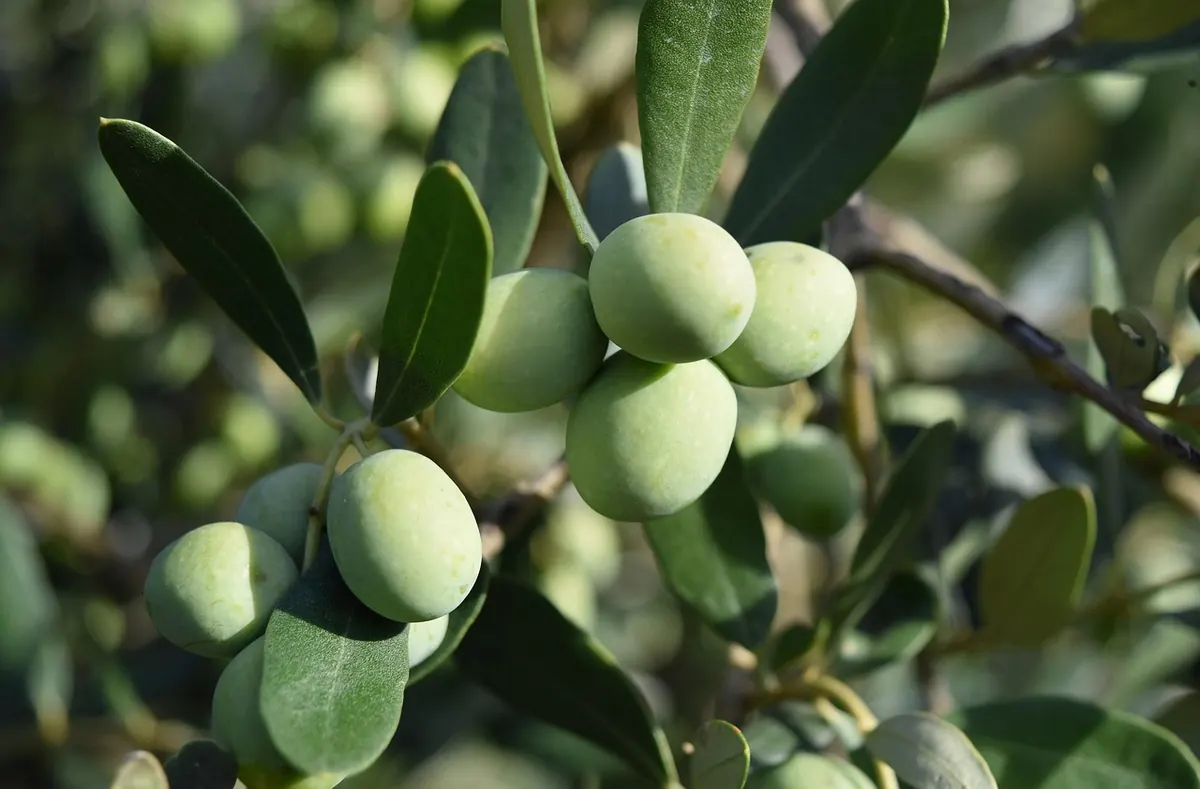
Flowers appear in late spring: tiny, cream and fragrant. If fruit sets, it swells through summer and colours in autumn. Olives straight from the tree are bitter and need curing in brine before eating. A patio tree will give you a bowlful in a good year, not a bottle of oil, and that is fine.
A simple year-round routine
- Spring: repot if needed, feed, prune once frost has passed, and check ties and stakes.
- Summer: water pots attentively and switch to a potassium-rich feed while fruit forms.
- Autumn: reduce watering as growth slows, harvest any fruit, and clean up fallen leaves.
- Winter: move and wrap pots, keep the compost on the dry side, and inspect for scale insects under leaves.
Buy the largest, healthiest tree you can afford, plant it with more grit than feels sensible, and be patient. Olives grow slowly and sulk briefly after moving, then settle into a rhythm. Even a tree that never fruits earns its place: evergreen, tolerant of drought, and quietly Mediterranean on a rainy British patio.
Photo: Peter Keeble / Pexels