5 Easy Mediterranean Recipes Using Olive Oil
There is a particular kind of cooking that starts with a bottle and a piece of bread and ends with something you would happily serve to guests. It belongs to the Mediterranean, but it does not require a plane ticket, a special pan or a long list of ingredients. What it does require is decent olive oil used with a bit of confidence, and the willingness to let a handful of good things taste like themselves.
The five dishes below are built on that idea. Some take two minutes. None will send you chasing an obscure ingredient. All of them improve when the oil you pour is one you actually like the taste of.
First, match the oil to the job
You do not need a cupboard full of bottles. Two is plenty: one for cooking, one for finishing. A gentle, buttery extra virgin suits roasting and baking. A greener, pepperier oil — often an early cold pressing — is what you want poured raw over bread, tomatoes and beans.
Judging quality is mostly a matter of smell and taste. Pour a teaspoon into a small glass, warm it in your palm and sniff. Fresh oil smells of cut grass, green almonds, artichoke or tomato leaves. Then taste it. A peppery catch at the back of your throat is a good sign, not a fault.
- Taste before you buy where you can. Many delis and market stalls will let you try a drop.
- Choose dark glass or tins, and keep them out of direct light.
- Use it within a year of harvest. Oil is a fresh product, not a vintage wine.
- Keep the finishing bottle off the hob, where heat and steam will dull it within weeks.
The dressing worth making twice a week
Most dressings fail for one of two reasons: too much acid, or oil added too quickly to come together. Fix both with a jam jar. Put a good pinch of salt in it, add your acid, and shake until the salt dissolves. Add roughly three times as much olive oil, screw the lid on and shake hard for ten seconds. It thickens slightly and keeps for a day or two in the fridge; bring it back to room temperature and shake again before using.
Three combinations that always work
- Lemon and oil. The juice of half a lemon to three tablespoons of oil, plus a little grated zest. For fish, greens, courgette and anything grilled.
- Red wine vinegar and mustard. One teaspoon of Dijon to one tablespoon of vinegar, then four tablespoons of oil. Sharp, and excellent on lentils or new potatoes.
- Honey and orange. A teaspoon of honey, a tablespoon of orange juice, a splash of vinegar, then oil. Good with roasted carrots, beetroot or bitter leaves.
Two habits make the difference. Season the leaves, tomatoes or beans separately, then dress at the last moment so nothing wilts. And taste with a piece of bread before you pour: a good dressing should taste slightly too sharp on its own and exactly right on the food.
Warm bread, good oil, ripe tomato
This is the recipe to make when someone insists they are not hungry and then eats four pieces. The Catalan version, pa amb tomàquet, is the benchmark: bread, tomato, oil, salt, nothing else. It depends entirely on the oil being worth tasting.
- Cut thick slices of a firm, slightly stale country loaf and grill or griddle them until charred in patches.
- Rub one side with a cut clove of garlic — once, lightly, unless you love garlic.
- Halve a very ripe tomato and rub the cut face over the bread, pressing so the pulp soaks in and leaving the skin behind.
- Pour over a generous amount of your finishing oil, add flaky sea salt, and eat standing up.
Variations all run in the same direction: torn mozzarella or burrata, a few salted anchovies, or white beans crushed with oil and rosemary. Do not add everything at once. And do not assemble the bread more than a few minutes ahead, or it turns to mush under the tomato.
Roasted vegetables that taste of something
Roasting goes wrong when it is treated as a chore: a thin slick of oil, a crowded tray, a low oven. Forty minutes later you have steam-softened sadness. The method is closer to frying than to baking.
- Heat the oven properly. Around 200°C (180°C fan) for most vegetables, and let the tray heat with it.
- Use enough oil. Two to three tablespoons for a large tray, tossed until every piece is glossy. Patchy oil means patchy browning.
- Leave space. One layer, cut sides down. Use two trays rather than crowd one.
- Salt before, not after, and tuck in whole unpeeled garlic cloves, sprigs of thyme or rosemary, and a dried chilli.
- Finish raw. A drizzle of pepperier oil, a squeeze of lemon and chopped parsley or mint once the tray is out of the oven.
Aubergine, red pepper, red onion and fennel are the reliable set. Courgette needs a hotter, quicker roast or it collapses. Squeeze the soft garlic from its skins and mash it into the oil left on the tray — that, spread on bread, is the cook's reward.
A pan, a clove of garlic and a good glug of oil
For a midweek plate that takes as long as the pasta boils, warm four tablespoons of oil in a wide pan over low heat with three thinly sliced garlic cloves and a pinch of chilli flakes. The garlic should turn pale gold, never brown. Pull the pan off the heat the moment it colours, because bitter garlic ruins the whole thing.
Cook the pasta in well-salted water, then move it straight into the pan with a couple of tablespoons of cooking water still clinging to it. Toss over medium heat for a minute so the starch and oil emulsify into a loose sauce. Finish off the heat with grated lemon zest, parsley and a thread of raw oil. Blanched peas, broccoli or chopped courgette can go into the pan first if you want something greener.
The five-minute tomato salad
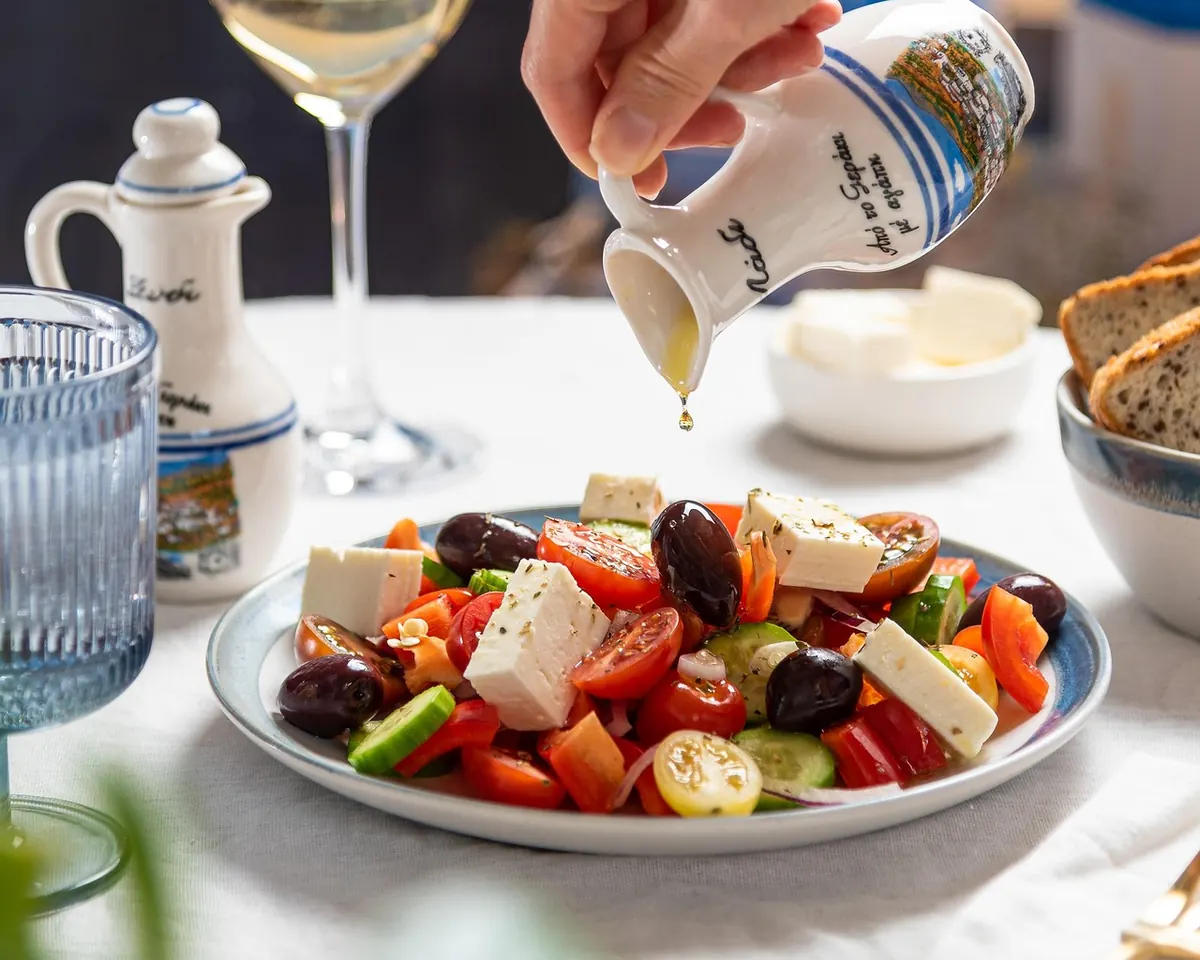
Slice ripe tomatoes, salt them and leave them for ten minutes in a shallow bowl. The salt draws out juice that becomes half the dressing. Add thinly sliced red onion, rinsed under cold water to take the edge off, a spoonful of capers, a pinch of dried oregano and a good glug of oil. A splash of red wine vinegar is optional and often unnecessary in August. Tear in basil or flat-leaf parsley at the end and keep bread nearby for the juice.
Keeping it simple, and keeping the oil good
None of these dishes needs skill or a long ingredient list. What they need is oil you would be happy to taste on its own, used in amounts that feel generous rather than cautious. Store bottles closed, cool and dark, and buy sizes you will actually finish.
If you keep one habit from all of this, make it the simplest one: whenever you open a new bottle, pour a little onto a spoon or a piece of bread. Ten seconds tells you exactly how to cook with it.
One practical note: olive oil is a fat and calorie-dense like any other, so it is worth treating as a generous drizzle rather than a flood. If you are following a diet for a medical reason, your GP or a registered dietitian can give you advice that fits your situation.
Photo: galyafanaseva / Pixabay